Measure it
Track speed, range, charge behavior, and acceleration so improvements can be compared instead of guessed.
Project 02
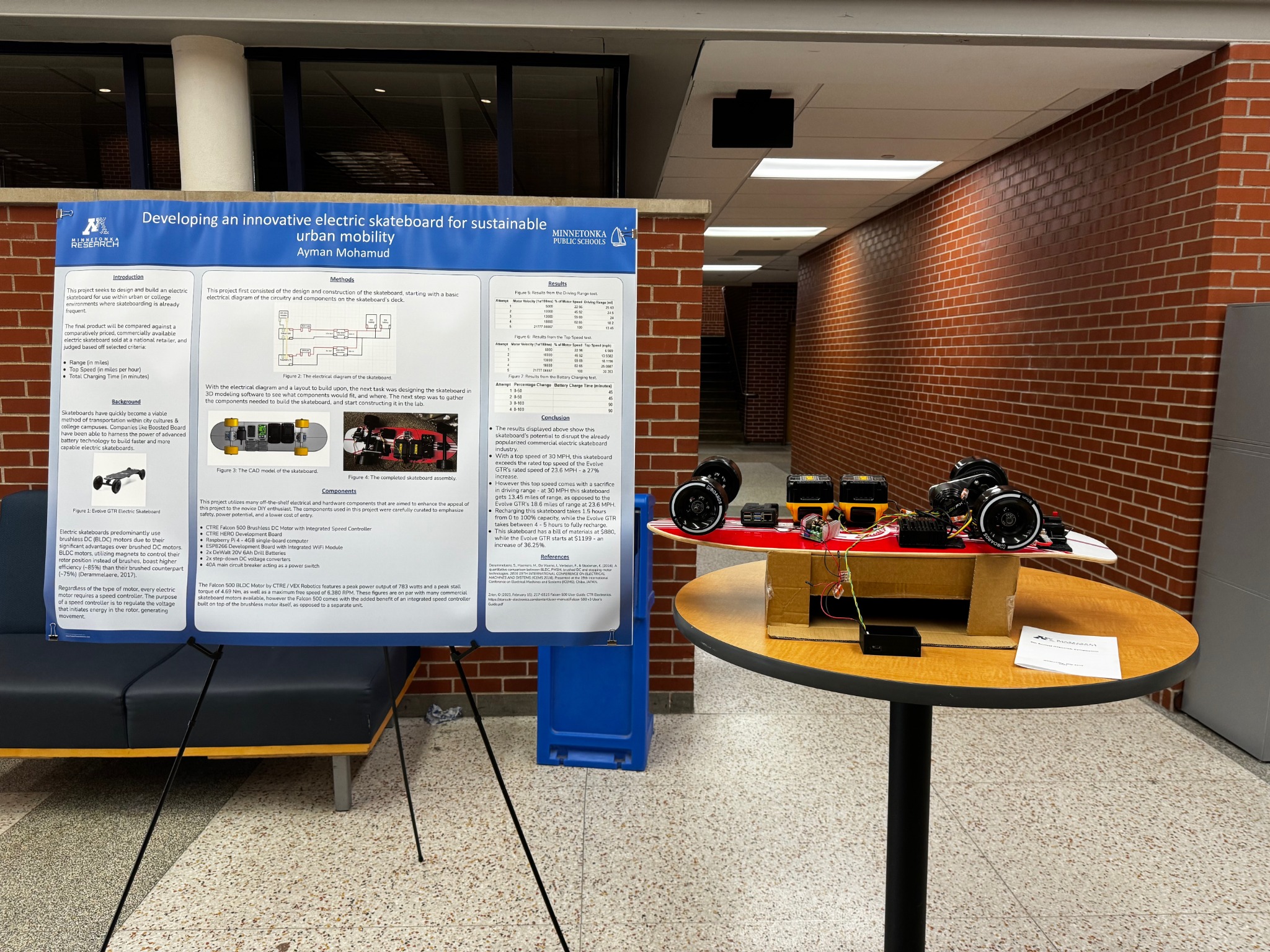
An electric mobility research platform designed around a simple question: could a student-built board be cheaper, faster, and more efficient than existing options?
Research goal
The project combined propulsion, battery power, control electronics, and communication in one mobile platform. I designed around a Falcon 500 with integrated Talon FX control, plus Raspberry Pi, HERO USB-CAN, and ESP8266 interfaces for telemetry and remote control.
Performance targets included range, speed, charge time, and acceleration, not just whether the board could move. A deadman control was part of the design from the beginning.
Mechanical powertrain
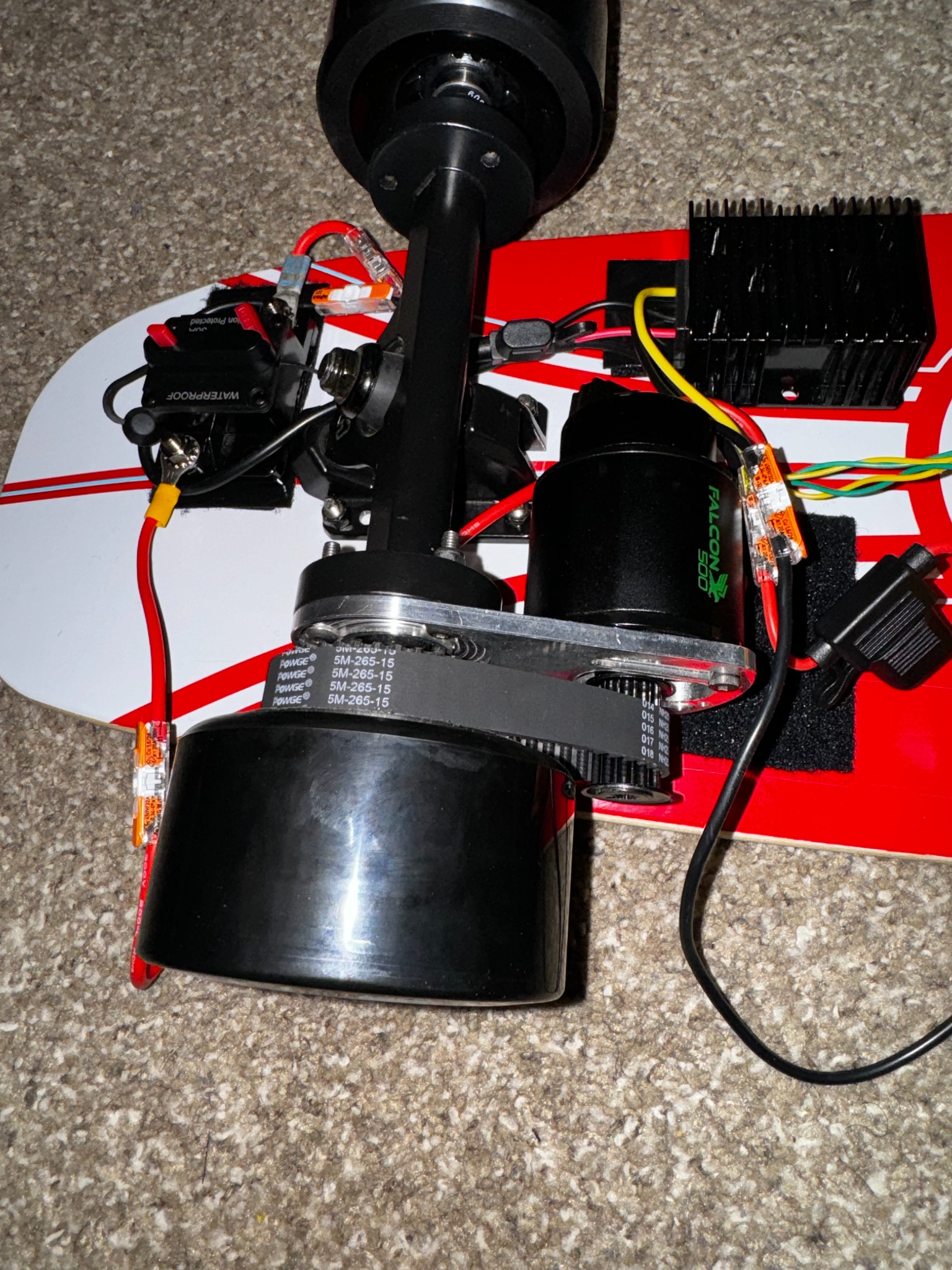
The drivetrain uses a compact belt reduction from motor to wheel. The exposed layout made alignment, tension, and component changes visible and testable while the design evolved.
Embedded control
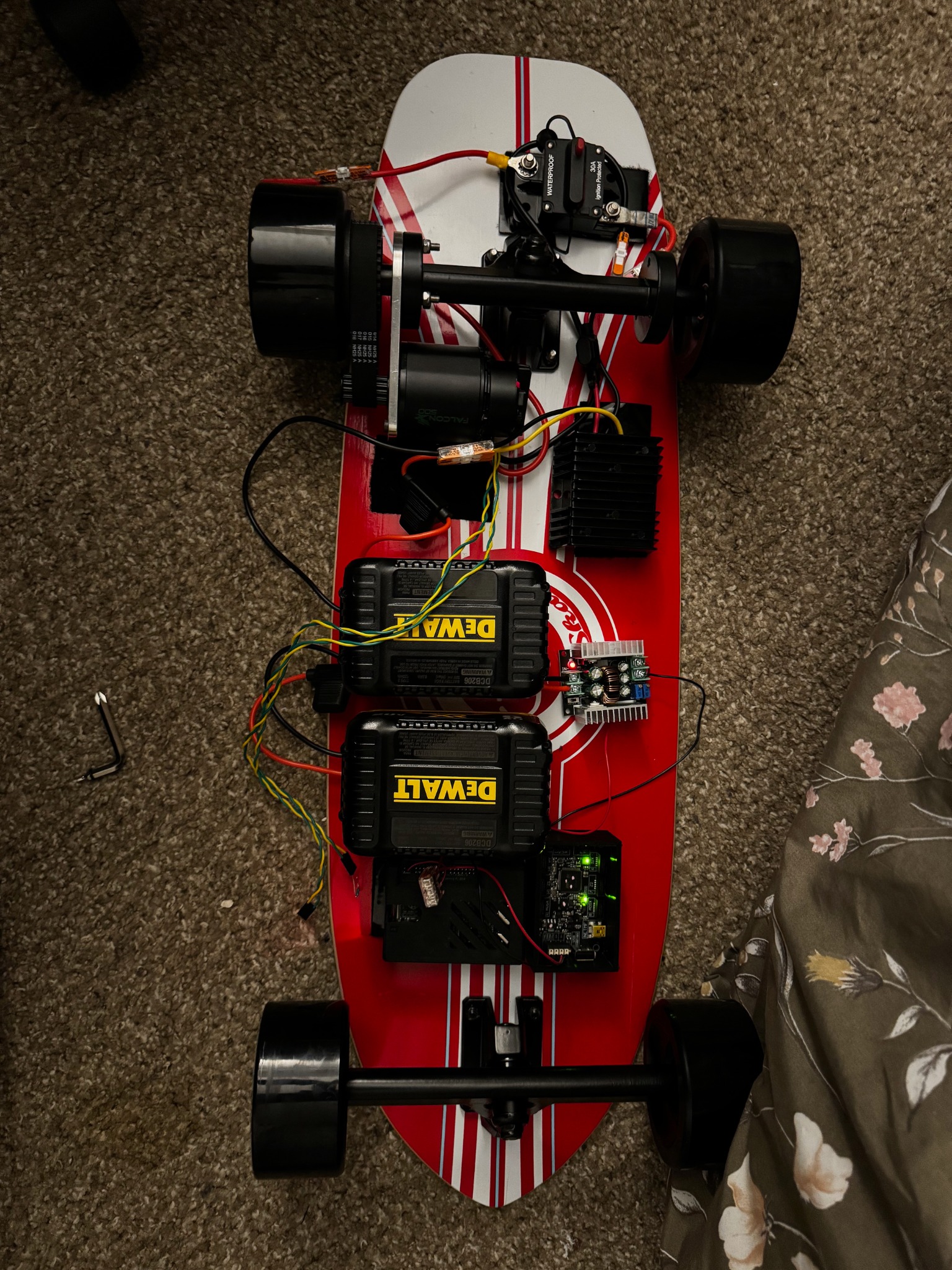
Off-the-shelf battery packs supplied the system while separate control hardware handled motor commands, communication, and instrumentation. The architecture allowed interfaces to change without redesigning the entire board.
Design priorities
Track speed, range, charge behavior, and acceleration so improvements can be compared instead of guessed.
Use deliberate remote control behavior and a deadman strategy so loss of input produces a predictable stop.
Use programmable controllers and standard communication buses so the platform can support future experiments.
What I learned
Motor response, wiring, mechanical packaging, and control logic could not be solved independently. The project taught me to treat the whole vehicle as one system, and to test claims with data.
Read the full research paper